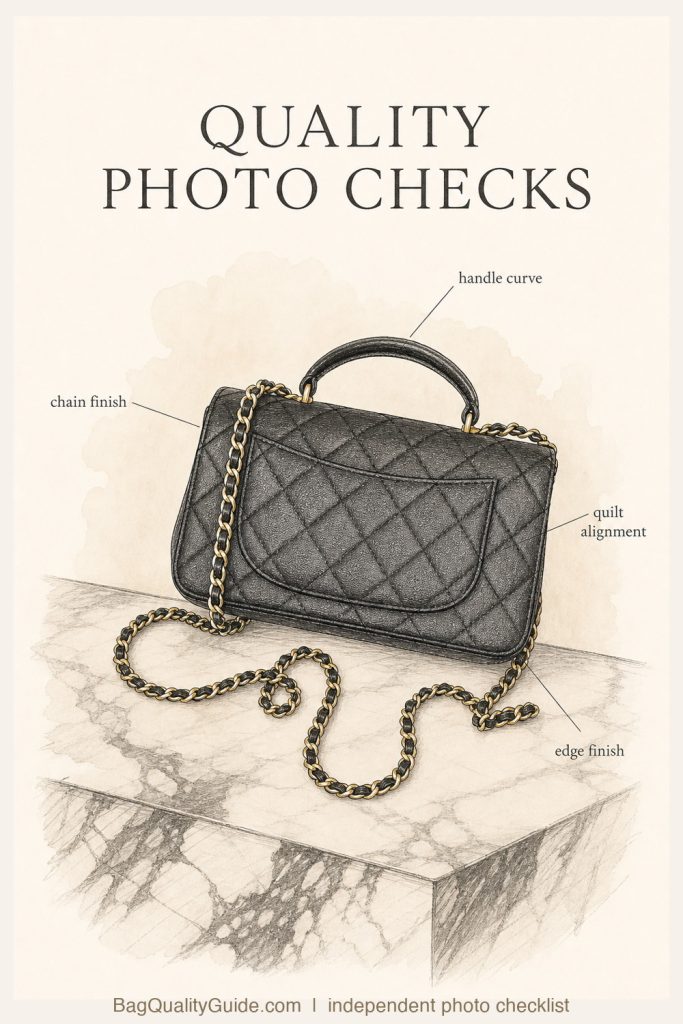
WOC Meaning in Bags: Chain Bag Photo Checklist
WOC means wallet on chain. Use this WOC bag photo checklist to review card slots, chain length, phone fit, side depth, closure, and seller photos.
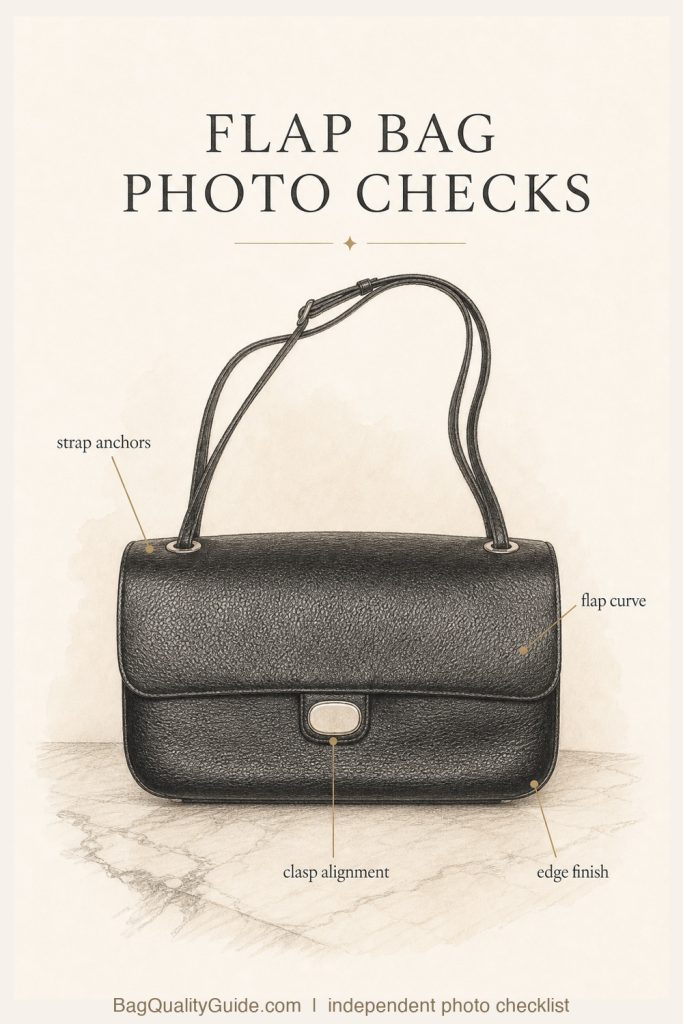
WOC means wallet on chain: a slim chain bag with card slots, a compact compartment, a flap or snap closure, and a chain strap. Use this checklist to review seller photos for side depth, card slots, chain length, phone fit, closure stress, and missing angles before deciding.
The album examples we reviewed included slim chain bags around 12 x 19.3 x 3.5 cm. That measurement is useful because it gives a realistic frame: this category is about edited essentials, not generous daily storage.
The practical promise
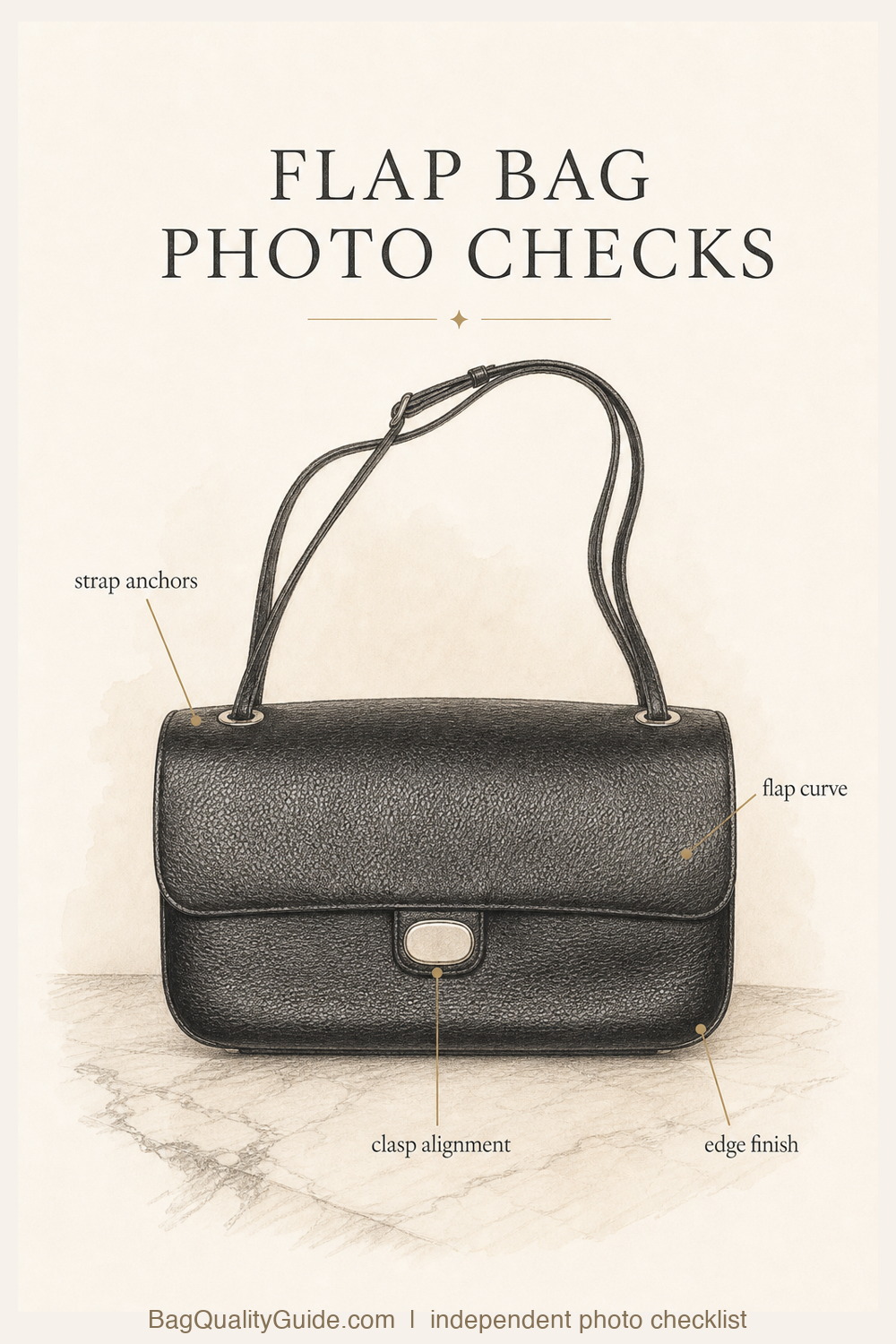
A good WOC-style bag should do three things well: hold cards cleanly, carry a phone without forcing the flap, and sit comfortably on the body with the chain extended. If one of those fails, the bag may still look good in product photos but feel annoying in real use.
| Area | What to check | Why it changes the decision |
|---|---|---|
| Interior | Card slots, zipper pocket, main compartment opening. | Interior structure can steal usable depth. |
| Side depth | Side profile with the flap closed. | A narrow side wall limits phone, keys, and lip balm combinations. |
| Chain | Full chain length and attachment points. | A beautiful chain is not useful if it sits at the wrong height. |
| Closure | Flap line and snap/magnetic closure position. | A stressed closure usually gets worse after filling. |
The photos that matter most
- Front view on a flat surface: check symmetry, flap line, and panel shape.
- Side view empty: understand the real depth before the bag is filled.
- Side view lightly filled: see whether the flap begins to lift or curve.
- Interior fully open: confirm card-slot layout and whether the opening is comfortable.
- Chain fully extended: confirm wearable length instead of judging from a coiled chain photo.
- Corner and edge close-ups: slim bags show wear and finish issues around corners quickly.
A short photo request you can send
Can you send a straight front photo, a side profile, the inside fully open, and the chain fully extended? If possible, please add one side photo with a phone and small keys beside the bag so I can judge capacity.
What this page should rank for
This is a B-layer page. It does not need brand names to attract the right reader. It can target WOC-style chain bag, wallet on chain size, slim chain bag capacity, card-slot bag photo check, and small crossbody bag checklist. This is closer to future conversion because the reader is actively evaluating a bag format.
WOC-Style Chain Bag FAQ
What does WOC mean in bags?
WOC usually means wallet on chain: a slim bag format with card slots, a small compartment, a flap or snap closure, and a chain strap. In seller photos, treat it as a wallet-sized chain bag first, then check whether the opening, side depth, and chain length make it useful for your daily carry.
What seller photos prove whether a WOC-style chain bag will fit enough?
Ask for the interior fully open, a side profile with the flap closed, the chain fully extended, and one scale photo beside a phone, keys, and cardholder. A straight front photo is not enough because a WOC-style bag can look larger than its usable depth.
Which missing WOC-style bag angles are red flags?
Be cautious if the album skips the side profile, chain attachment points, card slots, flap edge, corner close-ups, or an open interior view. Those missing angles make it harder to judge chain drop, closure stress, card-slot layout, stitching, edge finish, and real capacity.
Read next
- Chanel WOC Size Guide: What Fits and What Photos to Ask For
- QC Album Photo Requests That Actually Help
- Guides index
Editorial note: This guide is category-based and does not evaluate brand origin or authenticity. The diagram is original and does not reproduce official product imagery.
Have an Expert Review Your Bag Photos
Send the photos or album. We’ll point out visible quality red flags, missing angles, and the extra photos to ask for before deciding.