Hardware in Album Photos: Chains, Clasps, Zippers, and Tone
How to review hardware from real album patterns, including chain WOC styles, flap bags, zipper pouches, drawstring details, and tone matching.
Hardware is one of the first things people notice in bag photos, but it is also one of the easiest details to misread. Warm lighting can change tone. A chain can look neat while lying flat but twist when worn. A zipper can look straight when closed but rough at the end.
The sampled albums included chain bags, flap bags, zipper pouches, drawstring minis, and hardware notes. This guide turns those examples into a practical review sequence.
What the sampled albums showed
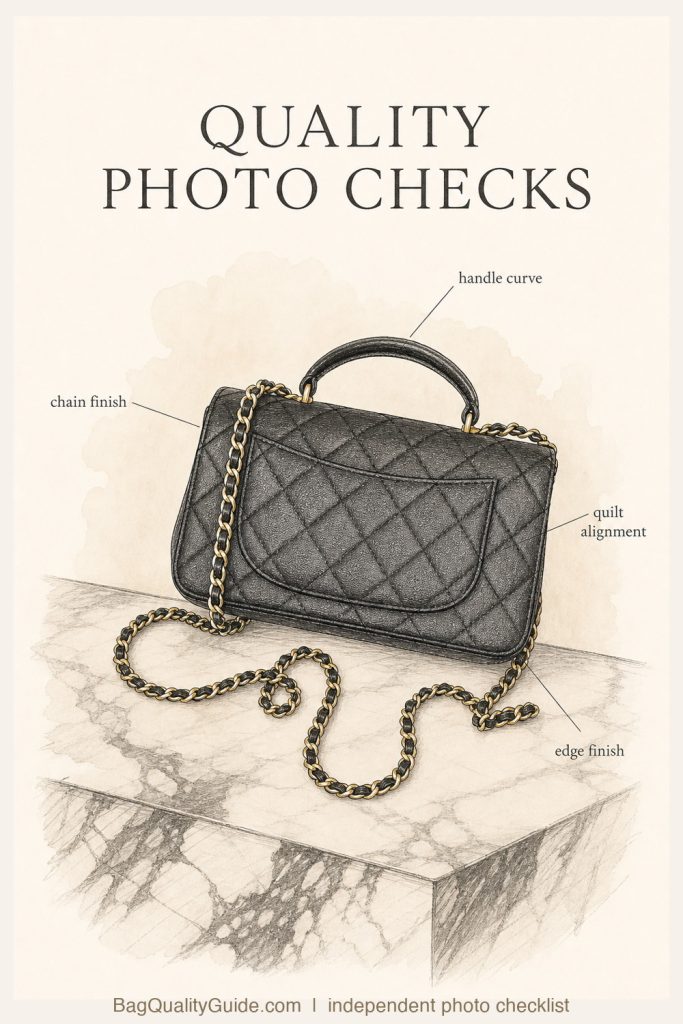
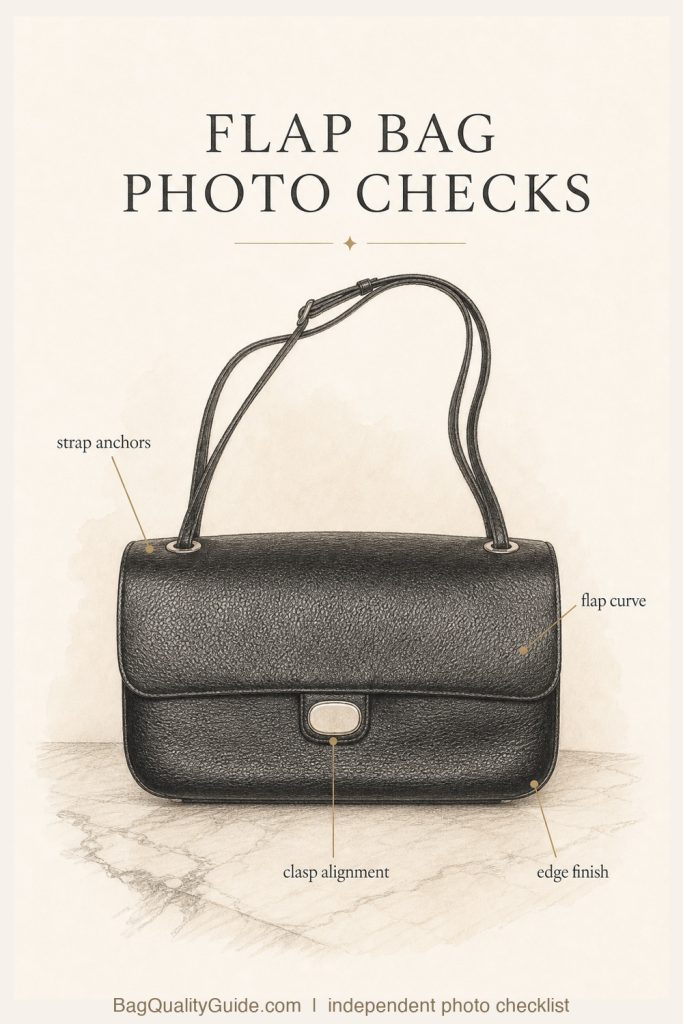
The mini satchel-style listing had flap and buckle details, so clasp alignment and flap level matter. The flat pouch listing depends on zipper quality and corner structure. The WOC-style examples depend on chain tone, chain length, card-slot function, and flap closure.
Drawstring mini styles add another layer: the small decorative parts may look cute, but the drawstring channel, exits, and closure movement matter more for daily use.
What to inspect in similar listings
Compare metal tone across parts
Do not judge tone from one close-up. Compare all metal points in the album.
- Compare chain, clasp, zipper pull, strap adjuster, and rivets.
- Ask for neutral light if the tone looks different in every photo.
- Check whether interior hardware matches visible exterior hardware when it matters.
- Remember that warm indoor photos can make metal look more yellow.
Review the functional hardware
The prettiest hardware is not always the most important. Prioritize what opens, closes, or carries weight.
- For pouches, inspect zipper teeth, zipper ends, and pull-tab angle.
- For WOC-style bags, inspect chain movement, eyelets, and flap closure.
- For satchel-style bags, inspect buckle placement and strap adjustment holes.
- For drawstring bags, inspect the drawstring exits and channel stitching.
Look for pressure around anchors
Hardware problems often show up in the material around the hardware.
- Check whether chain anchors pull the top edge inward.
- Check whether buckles distort the flap or strap.
- Check whether zipper ends bulge at one side.
- Check whether decorative charms add weight or twist the closure.
Questions worth asking before you decide
- Can I see hardware in neutral light, not only warm indoor light?
- Can I see the zipper open and closed?
- Can I see the chain or strap attachment under tension?
- Can I see the drawstring or clasp from both sides?
Bag Hardware Photo FAQ
What hardware photos should I ask for before judging a designer bag?
Ask for close-ups of the chain, clasp, zipper pull, zipper end, strap anchors, handle rings, logo plate, feet, and any metal tabs in natural light. A useful seller album should also show the same hardware from a straight angle and a slight side angle, so tone, engraving depth, alignment, and surface finish are easier to compare.
How can I tell if bag hardware tone matches across seller photos?
Compare metal parts that appear in the same frame, not only separate close-ups. Chain links, clasps, zipper pulls, logo plates, and strap anchors should read as the same gold, silver, gunmetal, or antique tone under similar light. If every close-up uses different lighting, ask for one photo that shows the main hardware pieces together.
Which missing hardware angles are red flags in bag photos?
Be cautious if the album skips the zipper end, clasp underside, chain attachment points, handle rings, screw heads, logo plate edge, or strap-anchor stitching. These missing angles make it harder to judge whether hardware is centered, functional, evenly plated, and properly supported by the surrounding leather or canvas.
Editorial note
The album samples were used as research inputs for bag shape, size, material, hardware, and photo-review patterns. Bag Quality Guide does not publish third-party album photos here and does not make official brand or authenticity claims.
Have an Expert Review Your Bag Photos
Send the photos or album. We’ll point out visible quality red flags, missing angles, and the extra photos to ask for before deciding.